In the realm of superfoods, few have captured global attention quite like chia seeds and quinoa. These nutrient-dense powerhouses have transcended their ancient origins to become staples in health-conscious diets worldwide. However, behind their modern popularity lies a complex story deeply rooted in the agricultural traditions and environmental realities of their native lands. Understanding where these crops come from, how they are cultivated today, and the socioeconomic implications of their production offers crucial insights into the true cost of our nutritional choices.
The story of chia begins in the arid highlands of central Mexico and Guatemala, where Salvia hispanica has been cultivated since pre-Columbian times. For the Aztecs and Mayans, these tiny seeds were more than just food—they were currency, religious offerings, and endurance-enhancing sustenance for warriors and messengers. Today, chia production remains concentrated in its ancestral home, with Mexico accounting for approximately 60% of global production. The states of Jalisco, Sinaloa, and Michoacán have become the heartland of commercial chia cultivation, where farmers employ both traditional methods and modern agricultural techniques.
Mexican chia farmers face unique challenges that test their resilience season after season. The crop thrives in well-drained soils with moderate fertility and requires careful water management despite its drought-resistant reputation. Most cultivation occurs during the rainy season from June to September, though irrigation systems support some year-round production. Farmers must vigilantly monitor for pests like aphids and whiteflies while avoiding excessive moisture that can lead to fungal diseases. The harvest typically occurs four to five months after planting, when the plants turn brown and the seeds easily detach—a delicate process often still done by hand to preserve seed quality.
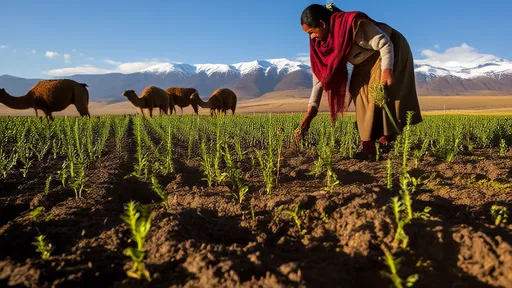
Meanwhile, in the high-altitude plains of Bolivia and Peru, quinoa has been undergoing its own agricultural renaissance. Known as the "mother grain" to the Inca civilization, Chenopodium quinoa has been cultivated in the Andean altiplano for over 5,000 years. The plant's incredible adaptability allows it to thrive at elevations between 2,500 and 4,000 meters, where thin air, intense ultraviolet radiation, and freezing temperatures make most crops impossible to grow. This resilience has made quinoa not just a cultural treasure but an economic lifeline for highland communities.
The quinoa landscape presents a study in contrasts between traditional and commercial farming practices. In the southern altiplano of Bolivia—particularly around the salt flats of Uyuni—vast mechanized farms have emerged to meet international demand. These operations utilize tractors, irrigation systems, and synthetic fertilizers to maximize yield. Conversely, in Peru's Puno region and throughout the smaller farming communities of both countries, many growers maintain ancestral methods: hand-tilling the rocky soil, using llama manure as fertilizer, and employing complex crop rotation systems that often include potatoes and barley.
Climate change poses an increasingly severe threat to both crops in their native regions. In Mexico, unpredictable rainfall patterns and prolonged droughts have forced chia farmers to adapt their irrigation strategies and planting schedules. Some are experimenting with shade-grown chia to reduce water evaporation, while others are developing new seed varieties with enhanced drought resistance. The Andean highlands are experiencing even more dramatic changes, with irregular frost patterns, unseasonal hailstorms, and glacial melt altering growing conditions that have remained relatively consistent for centuries. Quinoa's genetic diversity—with over 3,000 known varieties—may hold the key to its climate adaptation, but preserving this biodiversity requires conscious effort.
The economic impact of the superfood boom has created paradoxical situations in both regions. The skyrocketing global demand for quinoa initially brought unprecedented income to Andean farmers, with prices tripling between 2006 and 2013. This "quinoa gold rush" enabled many families to improve their living conditions, invest in education, and reduce rural-to-urban migration. However, it also created internal market distortions that made quinoa unaffordable for many local consumers who had relied on it as a dietary staple for generations. Similar patterns have emerged in chia-producing regions, where export-focused production sometimes conflicts with local food security needs.
Agricultural practices in both regions reflect evolving approaches to sustainability. Many quinoa farmers have embraced organic certification, recognizing the market premium it commands and the environmental benefits of avoiding synthetic chemicals. The traditional waru waru system—an ancient technique of raised planting beds surrounded by water channels—has been revived in some areas to improve water management and soil fertility. In Mexico, chia producers are increasingly implementing water conservation systems and exploring intercropping with native plants to enhance biodiversity. These sustainable methods not only protect the environment but often produce higher-quality seeds with better nutritional profiles.
The future of both crops depends heavily on balancing commercial success with ecological and social responsibility. Fair trade certifications have emerged as one important tool, ensuring that farmers receive equitable compensation and work under proper conditions. Several cooperatives in Bolivia and Peru now guarantee minimum prices, community development funds, and technical assistance to their members. In Mexico, similar initiatives help small-scale chia producers compete in the global market while maintaining sustainable practices. These models demonstrate that superfood production can benefit local communities rather than exploiting them.
Research and innovation continue to shape the agricultural landscape for both crops. Agricultural scientists are working with farmers to develop improved varieties that offer higher yields, better pest resistance, and enhanced nutritional content while preserving genetic diversity. In Bolivia, the PROINPA Foundation maintains a gene bank containing over 3,000 quinoa varieties, ensuring that this genetic wealth isn't lost to commercialization. Mexican researchers are studying wild relatives of chia to identify traits that could help cultivated varieties better withstand climate stresses. These efforts represent crucial investments in the long-term viability of both crops.
As consumers worldwide sprinkle chia seeds into their smoothies or prepare quinoa bowls, few consider the intricate web of environmental, economic, and cultural factors that bring these superfoods to their tables. The true value of these ancient crops extends far beyond their nutritional content—they represent living connections to agricultural heritage, testaments to human ingenuity in challenging environments, and opportunities for sustainable economic development. Supporting ethical production practices and understanding the origins of these foods allows consumers to participate in a global exchange that honors both the history and the future of these remarkable plants.
The journey from ancient staple to modern superfood has transformed both chia and quinoa in profound ways. As we continue to embrace these nutritional powerhouses, we must remember that their value isn't just measured in omega-3s or complete proteins, but in the livelihoods they support, the environments they inhabit, and the cultural traditions they represent. The story of these crops continues to evolve, shaped by climate, commerce, and the enduring knowledge of the farming communities who have nurtured them for millennia.
By /Aug 29, 2025
By /Aug 29, 2025
By /Aug 29, 2025

By /Aug 29, 2025
By /Aug 29, 2025
By /Aug 29, 2025
By /Aug 29, 2025

By /Aug 29, 2025

By /Aug 29, 2025
By /Aug 29, 2025
By /Aug 29, 2025
By /Aug 29, 2025
By /Aug 29, 2025
By /Aug 29, 2025

By /Aug 29, 2025
By /Aug 29, 2025

By /Aug 29, 2025
By /Aug 29, 2025
By /Aug 29, 2025

By /Aug 29, 2025