In the ever-evolving landscape of culinary arts, the concept of bread transformation has emerged as a fascinating frontier for chefs and food scientists alike. The idea of taking something as humble and fundamental as bread and reimagining its very essence speaks to a deeper desire for innovation and sustainability in our kitchens. This is not merely about using stale bread; it is a profound re-engineering of texture, flavor, and application, turning the ordinary into the extraordinary. The focus here lies on three particularly versatile categories: puddings, salads, and fried breads, each offering a unique canvas for texture modification.
The journey begins with an understanding of bread's inherent structure. At its core, bread is a matrix of starch and protein, capable of absorbing liquids and fats, and responding dramatically to heat. This plasticity is what makes it such a prime candidate for reinvention. Whether it's a dense rye, a airy brioche, or a standard sandwich loaf, each type brings its own character to the transformation process. The goal is to manipulate these base materials to achieve textures that are either entirely new or elevate the dish to a level of sophistication previously unattainable.
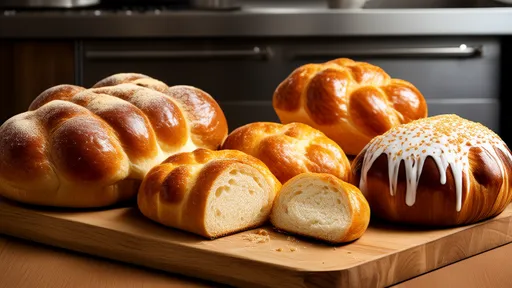
When we consider puddings, the classic bread and butter pudding immediately comes to mind. However, the modern approach goes far beyond this homely dessert. The texture of a bread pudding can be engineered to range from a dense, moist, cake-like consistency to an ethereally light and creamy custard. The secret lies in the choice of bread and the soaking technique. A rich, eggy bread like challah or brioche will absorb a custard base differently than a crusty, airy ciabatta. For a denser, more unctuous pudding, one might use a tight-crumbed bread and a higher ratio of bread to liquid, allowing it to soak for an extended period, sometimes even overnight, to break down the starches completely. Conversely, for a lighter texture, a more porous bread is quickly dipped in the custard to coat rather than saturate, preserving some of the bread's original structure and providing a pleasing contrast between soft custard and slight chewiness. The addition of ingredients like cream, mascarpone, or even pureed fruits can further alter the mouthfeel, creating layers of texture within a single dish.
Salads present a completely different set of challenges and opportunities for textural play with bread. Here, the bread is often used as a crunchy component to offset softer elements like leaves, vegetables, or proteins. The classic Caesar salad crouton is just the beginning. The texture transformation for salads involves dehydration and fat. By baking or frying small cubes of bread at a low temperature for a long time, you can achieve a profound crunch that remains stable even when dressed. But the innovation doesn't stop there. Bread can be pulverized into coarse crumbs and toasted with herbs and spices to create a "soil" or dust that adds a sandy, crunchy texture across the top of a salad. For a more dramatic effect, thin slices of bread can be baked until glass-like in their crispness to create edible "crackers" or shards that provide a dramatic textural break. Alternatively, for a more integrated approach, slightly stale bread can be torn into chunks and massaged with the dressing and juicy vegetable components, as in the Italian Panzanella, where it softens but retains a pleasing, chewy resilience that soaks up all the surrounding flavors.
Perhaps the most universally beloved category is fried bread. The simple act of submerging bread in hot oil sets off a series of rapid transformations. The moisture within instantly vaporizes, creating pockets of steam that puff up the structure. Simultaneously, the surface undergoes the Maillard reaction, browning and creating a complex, savory crust. The texture achieved can be tailored by the type of bread, the temperature of the oil, and the preparation method. For a light, airy, and crispy texture, as found in classic French toast or Spanish Torrijas, bread is first soaked in a sweetened milk or egg mixture. When fried, the interior becomes custardy and soft, while the outside caramelizes into a delicate, crisp shell. The contrast between the two textures is the hallmark of the dish. On the other end of the spectrum, for something like a Monte Cristo sandwich, the bread is simply dipped in egg batter and fried, creating a uniform, golden, and richly textured crust around the savory filling. For ultimate crunch, as in breaded foods, bread is removed from its form entirely, blitzed into crumbs, and used as a coating that fries up into a shatteringly crisp armor protecting a tender interior. The type of crumb—fresh, dry, panko-style, or finely ground—each offers a distinct final texture, from a delicate, flaky crunch to a hard, persistent crispness.
The science behind these transformations is as compelling as the results. Hydration is a key driver. When bread absorbs liquid, as in a pudding, the starch molecules swell and gelatinize, softening the structure. The proteins, primarily gluten, can also break down, leading to a more tender result. In contrast, the application of dry heat, as when making croutons or breadcrumbs, drives off moisture, causing the starches and proteins to harden and re-crystallize, creating crunch. Frying is a combination of both: rapid dehydration on the surface creates crunch, while the internal heat can gelatinize starches if moisture is present, leading to a soft interior. Understanding these principles allows a cook to precisely engineer the desired outcome, choosing the right bread and technique to achieve a specific textural profile.
Ultimately, the art of bread texture modification is a testament to creativity and resourcefulness. It encourages looking at a simple loaf not as a finished product, but as a raw material brimming with potential. By mastering the techniques for puddings, salads, and fried applications, one can unlock a world of sensory experiences, from the comforting softness of a custard-soaked pudding to the exhilarating crunch of a perfectly fried slice. It is a culinary practice that honors the past while enthusiastically innovating for the future, ensuring that no bread, regardless of its age, goes to waste without first offering up its full potential for delight.
By /Aug 29, 2025
By /Aug 29, 2025

By /Aug 29, 2025
By /Aug 29, 2025

By /Aug 29, 2025

By /Aug 29, 2025
By /Aug 29, 2025

By /Aug 29, 2025

By /Aug 29, 2025

By /Aug 29, 2025
By /Aug 29, 2025
By /Aug 29, 2025

By /Aug 29, 2025
By /Aug 29, 2025

By /Aug 29, 2025
By /Aug 29, 2025

By /Aug 29, 2025

By /Aug 29, 2025
By /Aug 29, 2025

By /Aug 29, 2025