In the dense rainforests of Mexico, an unassuming creature has long captivated the scientific community with its almost magical abilities. The axolotl, a permanently aquatic salamander, possesses the extraordinary capacity to regenerate entire limbs, spinal cords, and even parts of its heart and brain. For decades, researchers have peered into its biological toolbox, searching for the genetic blueprints that could one day inform human medicine. A groundbreaking study has now identified a crucial piece of this puzzle: a set of powerful enhancers that act as the master regulators of spinal cord regeneration.
The research, a monumental collaborative effort spanning several international institutions, moved beyond simply cataloging genes. Scientists have long known which genes are switched on during regeneration, but the precise mechanisms that control them—the switches and dimmers of the genetic world—remained largely elusive. This new work zeroes in on these regulatory elements, the enhancers, which are short regions of DNA that can dramatically boost the transcription of a target gene. By comparing the genomic landscapes of axolotls to those of non-regenerating species, the team pinpointed a unique suite of enhancers that are exclusively active during the complex process of rebuilding a severed spinal cord.
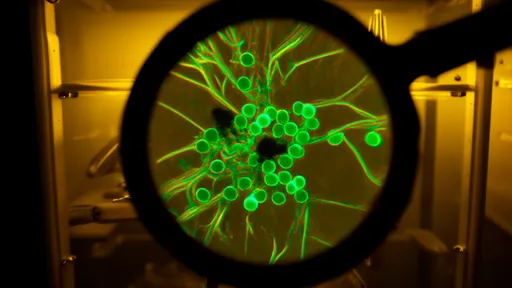
The methodology was as meticulous as it was innovative. The researchers employed advanced chromatin analysis techniques to map the open, accessible regions of the axolotl genome that become active after injury. This allowed them to identify thousands of potential enhancers. The real challenge, however, was determining their function. Using sophisticated transgenic techniques, they linked these candidate enhancers to a reporter gene and introduced them into axolotl embryos. The results were stunningly clear: specific enhancers lit up with activity precisely in the cells of the regenerating spinal cord, confirming their direct role in this process.
What makes these enhancers so remarkable is their ability to orchestrate a symphony of genetic activity. They do not act alone but in concert, creating a robust regulatory network that ensures the right genes are expressed at the right time and in the right place. This network initiates a carefully choreographed sequence of events: it first promotes the dedifferentiation of cells at the injury site, transforming them into a pluripotent state, and then guides their proliferation and subsequent redifferentiation into the intricate array of neurons and glial cells needed to form new, functional neural tissue. This precise control prevents the chaotic growth characteristic of cancer, highlighting the elegance of this evolved system.
The implications of this discovery are profound, offering a new lens through which to view the challenges of mammalian regeneration. While humans and other mammals possess many of the same core genes necessary for tissue regrowth, our regulatory landscape is different. Our enhancers for these genes are either absent, silent, or perhaps suppressed. This research suggests that the axolotl’s secret does not solely lie in unique genes, but in its unique genetic command and control system. The blueprint for regeneration is written in our DNA, but we lack the instructions to read it properly. The axolotl shows us those instructions.
This work fundamentally shifts the therapeutic paradigm. Instead of the daunting task of inserting new genes into humans, future therapies could focus on reactivating or mimicking these regulatory pathways that are already latent within our own genome. The identified enhancers provide a specific target—a molecular handle—for drug development or gene therapy aimed at kick-starting our innate but dormant regenerative capacities. It opens the door to novel treatments for spinal cord injuries, neurodegenerative diseases, and other conditions where tissue repair is currently impossible.
Of course, the path from salamander to human clinic is long and fraught with complexity. The axolotl’s biology, while a powerful guide, is not a direct template. Future research must delve into the exact proteins that bind to these enhancers and how their activity is triggered by injury. Furthermore, safely manipulating such powerful biological processes in humans without triggering unintended consequences, like tumorigenesis, remains a significant hurdle. Yet, this discovery provides a clear and exciting direction, a veritable North Star for the field of regenerative medicine.
In identifying these critical enhancers, scientists have not just found another genetic component; they have deciphered a key part of the axolotl’s regenerative lexicon. It is a testament to the power of evolutionary biology and modern genomics to provide answers to some of medicine's most persistent challenges. The message from the Mexican lakes is clear: the potential for regeneration is embedded in the very fabric of our DNA, waiting for us to learn how to unlock it.
By /Aug 27, 2025

By /Aug 27, 2025

By /Aug 27, 2025
By /Aug 27, 2025
By /Aug 27, 2025
By /Aug 27, 2025

By /Aug 27, 2025
By /Aug 27, 2025
By /Aug 27, 2025
By /Aug 27, 2025
By /Aug 27, 2025
By /Aug 27, 2025
By /Aug 27, 2025
By /Aug 27, 2025

By /Aug 27, 2025
By /Aug 27, 2025
By /Aug 27, 2025
By /Aug 27, 2025
By /Aug 27, 2025

By /Aug 27, 2025