Deep beneath the crushing pressure and eternal darkness of the Mariana Trench, a scientific revelation is quietly unfolding. Researchers have uncovered what they term a "genetic time capsule" buried within the sediment layers of the ocean's deepest point. This treasure trove is not gold or jewels, but something far more precious: ancient microbial DNA, preserved for millennia in the unique, cold, and high-pressure environment of the hadal zone. The discovery opens a new window into Earth's distant past, offering clues about the evolution of life and the resilience of microorganisms under extreme conditions.
The project, led by an international team of marine biologists and geneticists, involved the meticulous collection of sediment cores from depths exceeding 10,000 meters. Using specialized robotic submersibles designed to withstand the immense pressure, the team extracted samples from various layers, each representing a different epoch in geological history. The analysis of these samples revealed an astonishing diversity of microbial genetic material, some of which appears to be from species unknown to science, effectively frozen in time by the trench's isolating and preservative conditions.
What makes this finding particularly groundbreaking is the age and integrity of the genetic sequences. Preliminary dating suggests that some of the DNA fragments could be up to a million years old, preserved by the near-freezing temperatures, absence of sunlight, and limited microbial activity that would typically degrade organic matter. This level of preservation is unparalleled in other marine environments, making the Mariana Trench sediments a unique repository of planetary memory.
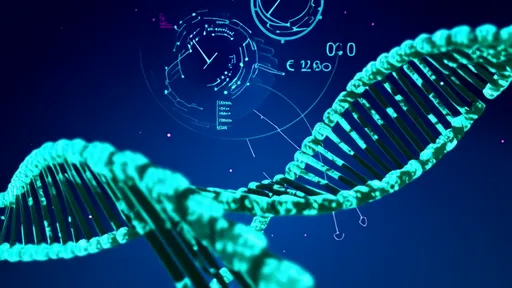
Scientists are particularly excited about the potential to reconstruct ancient microbial ecosystems. By sequencing these ancient genes, researchers can infer the metabolic capabilities of long-extinct microorganisms, understanding how they survived in an environment that has always been extreme. Some genes indicate adaptations to high pressure, suggesting that these microbes possessed unique proteins and cell structures that allowed them to thrive under crushing force, a trait that could have biotechnological applications today.
The implications extend beyond mere historical curiosity. This genetic archive serves as a baseline for understanding how microbial life has responded to past climatic changes. By comparing ancient genes with those of modern microbes, scientists can track evolutionary shifts over millennia, offering insights into how life might adapt to future environmental stressors, including those induced by human activity. It is a natural laboratory for studying long-term evolutionary processes.
Moreover, the discovery challenges previous assumptions about the limits of life. The presence of such ancient, well-preserved DNA in the deepest, most inhospitable part of the ocean suggests that genetic material can remain viable for far longer than previously thought under the right conditions. This raises fascinating questions about the possibility of finding preserved genetic traces in similarly extreme environments on other planets or moons, such as the subsurface oceans of Europa or Enceladus.
However, the work is not without its challenges. Extracting and analyzing ancient DNA requires stringent protocols to avoid contamination with modern genetic material. The research team employed state-of-the-art clean lab techniques and computational tools to authenticate the age of the sequences, ensuring that the findings are robust and reliable. Despite these precautions, the field is fraught with technical difficulties, from the physical retrieval of samples to the bioinformatic complexities of assembling fragmented ancient genomes.
Ethical considerations also come into play. The Mariana Trench is a remote and pristine environment, and there is a growing dialogue about the responsibility of scientists to minimize their impact while conducting such research. The team emphasized the use of non-invasive sampling methods and adherence to international guidelines for deep-sea exploration, aiming to preserve the integrity of this unique ecosystem for future studies.
As analysis continues, the next steps involve functional characterization of the ancient genes. Researchers are attempting to express these genes in modern laboratory microbes to see what proteins they produce and how they function. This could lead to the discovery of novel enzymes or biochemical pathways with applications in medicine, industry, or environmental remediation, turning ancient genetic blueprints into tools for the future.
In essence, the Mariana Trench's sediment layers are more than just mud; they are pages in a biological history book that we are only beginning to read. This "genetic time capsule" not only enriches our understanding of life's endurance and evolution but also reminds us of the vast, unexplored mysteries that lie in the deepest corners of our planet. It is a humbling and thrilling frontier for science, promising to yield discoveries for decades to come.
By /Aug 27, 2025

By /Aug 27, 2025

By /Aug 27, 2025
By /Aug 27, 2025
By /Aug 27, 2025
By /Aug 27, 2025

By /Aug 27, 2025
By /Aug 27, 2025
By /Aug 27, 2025
By /Aug 27, 2025
By /Aug 27, 2025
By /Aug 27, 2025
By /Aug 27, 2025
By /Aug 27, 2025
By /Aug 27, 2025
By /Aug 27, 2025
By /Aug 27, 2025
By /Aug 27, 2025
By /Aug 27, 2025

By /Aug 27, 2025