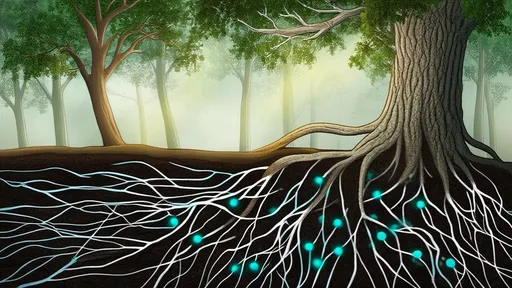
Deep within the forest floor, beneath the rustling leaves and the quiet hum of life, exists a sophisticated communication network that has silently shaped forest ecosystems for millions of years. This is not a network of wires and signals, but a biological internet, a complex web of fungal threads known as the mycorrhizal network. Often poetically dubbed the "Wood Wide Web," this subterranean system is now being understood by scientists as a fundamental medium through which trees share resources and, most intriguingly, exchange vital warnings about impending threats.
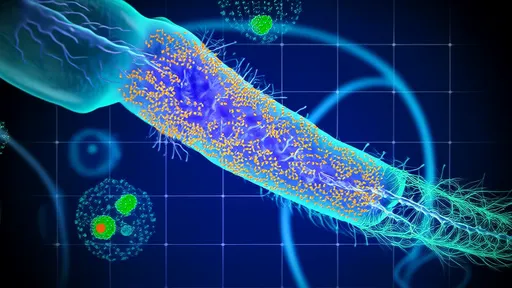
The foundation of this network is the symbiotic relationship between tree roots and mycorrhizal fungi. The fungi, with their vast, microscopic hyphae, envelop and penetrate the root tips of trees, creating an interface for exchange. The trees provide the fungi with sugars and carbohydrates forged from sunlight. In return, the fungi vastly extend the effective reach of the tree's root system, scavenging for water and essential nutrients like nitrogen and phosphorus, which they deliver back to their host. This mutualistic partnership is the physical infrastructure upon which forest communication is built.
What has captivated researchers is the discovery that this network transmits more than just sustenance. When a tree is attacked by insects or infected by a pathogen, it mounts a defense. Part of this biochemical defense response involves releasing certain compounds into its root system and, by extension, into the surrounding mycorrhizal network. Neighboring trees connected to this network can detect these chemical signals. It is a form of ecological eavesdropping, a silent alarm bell that prompts the receiving trees to preemptively ramp up their own defensive enzymes. They are essentially put on high alert, allowing them to better withstand an assault that has not yet reached them.
The implications of this arboreal early-warning system are profound. It suggests that a forest is far more than a collection of individual trees competing for light and soil. Instead, it behaves as a cohesive superorganism, an interconnected community where the health of one member can directly influence the resilience of others. A tree under duress does not suffer in isolation; it broadcasts its plight, enabling its neighbors to fortify themselves. This collective intelligence enhances the overall survival chances of the forest stand, especially when facing widespread threats like voracious insect swarms or spreading fungal diseases.
This phenomenon challenges long-held notions in ecology about competition being the sole driver of forest dynamics. While competition undoubtedly exists, cooperation through the mycorrhizal network reveals a layer of complexity we are only beginning to decipher. It appears that trees, particularly those of the same species and often kin, can recognize and prioritize aiding related individuals through this network, funneling more resources to struggling saplings that share their genetic lineage. This adds a fascinating dimension of familial loyalty to the forest's social structure.
Understanding the Wood Wide Web is not merely an academic exercise; it has critical practical applications for the future of our planet's forests. As climate change increases the frequency and intensity of droughts, pest outbreaks, and wildfires, the integrity of these fungal networks becomes paramount. Sustainable forestry practices that preserve underground fungal communities could be crucial for helping forests adapt to these rapidly changing conditions. Clear-cutting and soil compaction from heavy machinery sever these lifelines, potentially leaving remaining trees more vulnerable and isolated. The wisdom of the forest, it seems, is literally grounded in the soil, and our management strategies must begin to account for this hidden world.
The discovery of the forest's intelligent network is a humbling reminder of how much we have yet to learn about the natural world. The trees, silent and steadfast, have been communicating in their own chemical language for eons. They share news of danger, support their kin, and contribute to the health of the whole community through a tangled, collaborative web beneath our feet. It is a system built not on individual ambition, but on collective survival, offering a profound lesson from the forest that resonates far beyond its leafy borders.
By /Aug 27, 2025

By /Aug 27, 2025

By /Aug 27, 2025
By /Aug 27, 2025
By /Aug 27, 2025
By /Aug 27, 2025

By /Aug 27, 2025
By /Aug 27, 2025

By /Aug 27, 2025

By /Aug 27, 2025
By /Aug 27, 2025
By /Aug 27, 2025
By /Aug 27, 2025
By /Aug 27, 2025
By /Aug 27, 2025
By /Aug 27, 2025

By /Aug 27, 2025
By /Aug 27, 2025
By /Aug 27, 2025

By /Aug 27, 2025