Ant Colony Optimization: A Swarm Intelligence Computational Model for Argentine Ant Foraging Paths

Aug 27, 2025 By

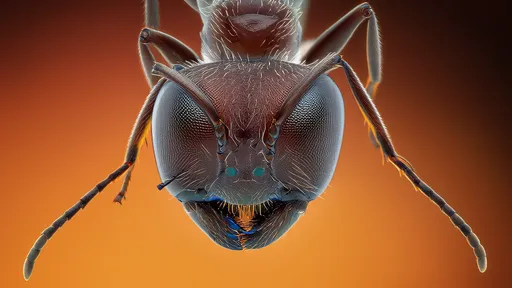
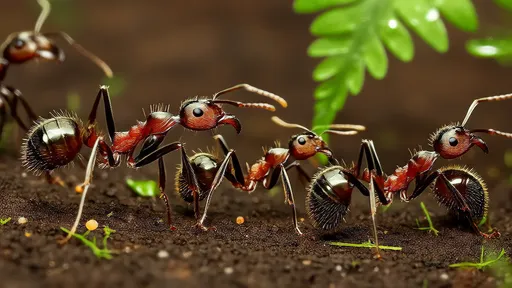
In the intricate world of computational intelligence, nature has long served as a profound source of inspiration. Among the most fascinating models derived from biological systems is the Ant Colony Optimization (ACO) algorithm, a metaheuristic that mimics the foraging behavior of real ant colonies. A particularly compelling case study within this domain focuses on the Argentine ant (Linepithema humile), a species known for its remarkable collective efficiency in locating and exploiting food sources. This article delves into the sophisticated computational model that translates the Argentine ant's path-finding prowess into a powerful tool for solving complex optimization problems.

The foundational principle of the ACO algorithm lies in the ants' use of pheromone trails. As ants forage, they deposit chemical signals on the ground. Other ants detect these pheromones and are more likely to follow paths with stronger concentrations, which in turn leads to further reinforcement of that trail. This creates a positive feedback loop where the shortest or most efficient path to a food source becomes increasingly pronounced. The Argentine ant, with its highly cooperative and invasive nature, exhibits this behavior with exceptional clarity, making it an ideal biological prototype for computational modeling.

Researchers have developed detailed mathematical frameworks to emulate this process. Each artificial "ant" in the simulation represents a potential solution constructor. As it traverses a graph representing the problem space—be it a network for the Traveling Salesman Problem, a routing path in telecommunications, or a scheduling grid—it probabilistically chooses its path based on the pheromone intensity and heuristic information, such as the distance between nodes. The pheromone levels are updated dynamically: evaporation prevents stagnation and convergence on suboptimal paths, while deposition reinforces promising routes. This balance between exploration and exploitation is crucial for the algorithm's success.

The application of this bio-inspired model to the Argentine ant's behavior is not merely theoretical. Field studies have meticulously documented the foraging patterns of these ants, noting their ability to establish efficient trails through complex terrains with minimal individual cognition. This empirical data has been instrumental in refining the ACO parameters, such as the pheromone evaporation rate and the relative importance of heuristic versus pheromone information. By aligning the algorithm's mechanics with observed biological phenomena, scientists have enhanced both the authenticity and the performance of the computational model.

One of the most significant advantages of the ACO algorithm, inspired by the Argentine ant, is its robustness in handling dynamic and noisy environments. In nature, food sources deplete, obstacles appear, and conditions change; ant colonies adapt their trails accordingly. Similarly, the artificial system can be designed to respond to real-time changes in the problem constraints. For instance, in network routing, if a node fails or traffic congestion occurs, the algorithm can redistribute the "ants" to find new optimal paths without requiring a complete reset, showcasing its resilience and practicality.

Moreover, the swarm intelligence inherent in this model demonstrates emergent problem-solving capabilities that surpass the sum of its parts. No single ant possesses a global overview of the environment, yet the colony collectively arrives at an efficient solution. This decentralized, self-organizing approach is particularly valuable for large-scale systems where centralized control is impractical or inefficient. The Argentine ant model, therefore, offers a blueprint for designing distributed algorithms that are scalable, flexible, and robust.

Despite its strengths, the ACO algorithm is not without challenges. Parameter tuning—such as determining the optimal number of ants, evaporation rate, and influence of heuristic data—can be complex and problem-dependent. Over-reliance on pheromone trails might lead to premature convergence on local optima, a pitfall that researchers mitigate by incorporating techniques like elitist strategies or max-min pheromone limits. Continuous research aims to enhance the algorithm's adaptability and convergence speed, drawing further insights from the ever-evolving study of ant ethology.

In conclusion, the fusion of entomology and computer science through the Ant Colony Optimization algorithm exemplifies the power of interdisciplinary research. The Argentine ant, with its efficient foraging strategies, provides a natural template for developing computational models that address some of the most daunting optimization challenges in engineering, logistics, and data science. As we continue to decode the mysteries of swarm intelligence, the humble ant remains a testament to the sophistication and elegance of evolutionary design, inspiring algorithms that are not only effective but also intrinsically aligned with the rhythms of the natural world.
Recommend Posts
Biology

Stem Cell Regeneration Blueprint: Discovery of Regeneration-Related Enhancers in the Mexican Axolotl"

By /Aug 27, 2025

In the dense rainforests of Mexico, an unassuming creature has long captivated the scientific community with its almost magical abilities. The axolotl, a permanently aquatic salamander, possesses the extraordinary capacity to regenerate entire limbs, spinal cords, and even parts of its heart and brain. For decades, researchers have peered into its biological toolbox, searching for the genetic blueprints that could one day inform human medicine. A groundbreaking study has now identified a crucial piece of this puzzle: a set of powerful enhancers that act as the master regulators of spinal cord regeneration.
Biology

Epigenetic Basis of Systemic Acquired Resistance in Arabidopsis thaliana: Plant Immune Priming

By /Aug 27, 2025

In the intricate world of plant biology, few phenomena are as fascinating as the concept of immune priming, particularly through systemic acquired resistance (SAR). At the forefront of this research stands Arabidopsis thaliana, the humble thale cress, which has served as an indispensable model organism for unraveling the molecular intricacies of how plants defend themselves against pathogens. While the biochemical pathways of SAR have been mapped with increasing precision over the past decades, a deeper, more enigmatic layer of regulation has emerged: the role of epigenetics. This heritable yet reversible control of gene expression, without alterations to the DNA sequence itself, is now recognized as a fundamental pillar of how plants "remember" past infections to mount a faster and more robust defense in the future.
Biology

Biological Hydrometallurgy: Recovery of Gold from E-Waste by Ferrous Sulfate-Reducing Bacteria

By /Aug 27, 2025

In the ever-evolving landscape of electronic waste management, a groundbreaking biological approach is capturing the attention of researchers and industry experts alike. The utilization of Acidithiobacillus ferrooxidans, a bacterium known for its role in bioleaching, is emerging as a sustainable method to recover gold from discarded electronics. This innovative technique not only addresses the growing environmental concerns associated with e-waste but also offers an economically viable alternative to traditional, often hazardous, extraction processes.
Biology

New Frontiers in Nanobodies: Mechanism of Shark Nanobodies Neutralizing SARS-CoV-2

By /Aug 27, 2025

In the relentless pursuit of effective countermeasures against SARS-CoV-2, the virus responsible for the COVID-19 pandemic, scientists have cast their nets into unexpected waters, uncovering a potent ally in the most ancient of vertebrates: sharks. The emerging frontier of nanobodies derived from these marine predators is rewriting the rules of viral neutralization, offering a glimpse into a future of robust and adaptable therapeutic interventions.
Biology

Protein Design Revolution: Breakthroughs in Predicting Membrane Protein Structures with RosettaFold2

By /Aug 27, 2025

The landscape of structural biology shifted seismically this summer when DeepMind's AlphaFold2 stunned the scientific community with its unprecedented accuracy in predicting protein structures from amino acid sequences. For decades, this problem—the protein folding problem—had been one of biology's grandest challenges. Yet, in the triumphant wake of this achievement, a significant frontier remained largely unconquered: the intricate and vital world of membrane proteins.
Biology

Polarization Vision in Insect Compound Eyes: Neural Mechanisms for Desert Ant Navigation Using Polarized Light

By /Aug 27, 2025

The desert ant Cataglyphis is a master navigator of barren landscapes, a tiny creature that forages under the blazing sun with a precision that belies its minuscule brain. It ventures hundreds of meters from its nest in search of food, a journey across a featureless terrain of sand and rock where landmarks are scarce and the heat is lethal. Yet, it consistently finds its way back along a near-straight line to its nest entrance, a hole barely visible in the vastness. This remarkable feat, known as path integration, relies on an internal pedometer to count steps and, most crucially, a celestial compass that reads the pattern of polarized light in the sky. The neural machinery behind this polarized light navigation is a breathtaking example of evolutionary miniaturization and efficiency, a biological marvel that has captivated scientists for decades.
Biology

Lichen Bioindicators: Sensitive Response of Fruticose Lichens to Atmospheric Heavy Metal Pollution

By /Aug 27, 2025

In the quiet corners of our cities, on ancient gravestones and weathered tree bark, an unassuming yet powerful sentinel of environmental health thrives. Lichens, those symbiotic marvels of fungi and algae or cyanobacteria, have long been recognized by scientists as nature's own pollution monitoring stations. Among these, the fruticose or shrubby lichens stand out for their extraordinary sensitivity to atmospheric heavy metal contamination, serving as early warning systems with a precision that often surpasses sophisticated mechanical devices.
Biology

Temperature Compensation of the Arabidopsis Circadian Clock in a Fluctuating Environment

By /Aug 27, 2025

In the intricate dance of life, organisms have evolved sophisticated internal timekeeping mechanisms known as circadian clocks to anticipate and adapt to the daily cycles of light and temperature. Among model organisms, Arabidopsis thaliana has emerged as a pivotal system for unraveling the mysteries of these biological rhythms. Recent research has deepened our understanding of a remarkable feature of the plant's circadian clock: its ability to maintain period stability despite fluctuations in ambient temperature—a phenomenon termed temperature compensation.
Biology

Embryonic Morphogenesis Field: Electromagnetic Field Guidance Mechanism for Collective Cell Migration

By /Aug 27, 2025

In the intricate ballet of embryonic development, where clusters of cells migrate with astonishing precision to form complex structures, scientists are uncovering a fascinating dimension of cellular guidance. For decades, the prevailing models have focused on biochemical signaling—gradients of morphogens, adhesive cues, and chemotactic factors that direct cellular traffic. However, a growing body of research is pointing toward a more fundamental, physical force at play: endogenous electromagnetic fields. The concept of an embryonic morphogenetic field, long a theoretical construct in developmental biology, is being re-examined through the lens of bioelectromagnetics, suggesting that collective cell migration is not merely a chemical conversation but an orchestrated electromagnetic symphony.
Biology

Revolutionary Applications of Dead Sea Halophilic Enzymes in Organic Synthesis

By /Aug 27, 2025

In the sun-scorched, mineral-rich waters of the Dead Sea, where life seems an impossibility, thrives a remarkable class of biological catalysts known as halophilic enzymes. For decades, the extreme conditions of hypersaline environments were viewed primarily through the lens of ecological curiosity. Today, however, the scientific and industrial communities are awakening to the immense potential locked within these resilient proteins. The study and application of extremophilic enzymes from the Dead Sea are spearheading a quiet revolution in organic synthesis, challenging conventional methodologies and opening doors to more sustainable, efficient, and previously unfeasible chemical processes.
Biology

Synaptic Markers: PKMζ Protein as a Molecular Switch for Long-Term Memory Maintenance

By /Aug 27, 2025

In the labyrinthine world of neuroscience, few discoveries have sparked as much intrigue and debate as the role of PKMζ in memory persistence. For over a decade, this atypical protein kinase was hailed as the master switch for long-term memory, a molecular guardian of our most cherished experiences. The story began with a series of elegant experiments that pointed to PKMζ as the essential molecule maintaining the strength of synaptic connections long after a memory was formed.
Biology

Precision Viral Therapy: M13 Phage-Mediated Delivery of Epigenetic Editing Tools

By /Aug 27, 2025

In the rapidly evolving landscape of precision medicine, a groundbreaking approach has emerged that leverages the unique properties of the M13 bacteriophage to deliver epigenetic editing tools with remarkable specificity. This innovative strategy represents a significant leap forward in targeted therapeutic interventions, merging virology, nanotechnology, and epigenetics to address complex diseases at their molecular roots. The M13 phage, a filamentous virus that naturally infects bacteria, has been ingeniously repurposed as a nanocarrier, offering a biocompatible and highly programmable platform for precise drug delivery.
Biology

Forest Wisdom Network: Trees Exchange Risk Alerts Through Mycorrhizal Networks

By /Aug 27, 2025

Deep within the forest floor, beneath the rustling leaves and the quiet hum of life, exists a sophisticated communication network that has silently shaped forest ecosystems for millions of years. This is not a network of wires and signals, but a biological internet, a complex web of fungal threads known as the mycorrhizal network. Often poetically dubbed the "Wood Wide Web," this subterranean system is now being understood by scientists as a fundamental medium through which trees share resources and, most intriguingly, exchange vital warnings about impending threats.
Biology

Deep Sea Gene Time Capsule: Ancient Microbial Genes from Mariana Trench Sediments

By /Aug 27, 2025

Deep beneath the crushing pressure and eternal darkness of the Mariana Trench, a scientific revelation is quietly unfolding. Researchers have uncovered what they term a "genetic time capsule" buried within the sediment layers of the ocean's deepest point. This treasure trove is not gold or jewels, but something far more precious: ancient microbial DNA, preserved for millennia in the unique, cold, and high-pressure environment of the hadal zone. The discovery opens a new window into Earth's distant past, offering clues about the evolution of life and the resilience of microorganisms under extreme conditions.
Biology

Ant Colony Optimization: A Swarm Intelligence Computational Model for Argentine Ant Foraging Paths

By /Aug 27, 2025

In the intricate world of computational intelligence, nature has long served as a profound source of inspiration. Among the most fascinating models derived from biological systems is the Ant Colony Optimization (ACO) algorithm, a metaheuristic that mimics the foraging behavior of real ant colonies. A particularly compelling case study within this domain focuses on the Argentine ant (Linepithema humile), a species known for its remarkable collective efficiency in locating and exploiting food sources. This article delves into the sophisticated computational model that translates the Argentine ant's path-finding prowess into a powerful tool for solving complex optimization problems.
Biology

Plant Acoustic Ecology: Directed Growth of Rice Roots in Response to Subterranean Sound Frequencies"

By /Aug 27, 2025

In the quiet world beneath our feet, a revolution in botanical understanding is taking root. For centuries, plants were considered passive organisms, simply responding to light, moisture, and nutrients in their immediate environment. But groundbreaking research in plant acoustics ecology is revealing an astonishing reality: plants not only perceive sound but actively use acoustic signals to guide their growth and survival strategies. Among the most compelling discoveries is how rice plants demonstrate sophisticated acoustic sensitivity, particularly through their root systems responding to specific underground frequency patterns.
Biology

Bioluminescent Marking: Gene Editing Tracing Technology for the Luminous Organs of Deep-Sea Lanternfish

By /Aug 27, 2025

In the perpetual darkness of the deep sea, nature has engineered one of its most mesmerizing adaptations: bioluminescence. Among the myriad of light-producing creatures, the lanternfish stands out not only for its abundance but for the sophisticated biological lanterns that dot its body. These intricate organs, capable of producing light through biochemical reactions, have long fascinated scientists seeking to understand their development, function, and evolution. Recent breakthroughs in genetic engineering have now made it possible to delve deeper into this luminous mystery than ever before.
Biology

Insect Wing Vein Fluid Dynamics: The Mystery of Dragonfly Wing Vein Structure Optimizing Aerodynamics

By /Aug 27, 2025

In the intricate dance of aerial mastery, few creatures command the skies with the precision and grace of the dragonfly. For centuries, observers have marveled at its acrobatic prowess—its ability to hover, dart, reverse, and accelerate with seemingly effortless control. While human aviation has relied on rigid, fixed-wing designs and powerful engines to achieve flight, the dragonfly operates on an entirely different principle, one honed by over 300 million years of evolutionary refinement. The secret to its unparalleled aerodynamic performance lies not in brute force, but in the elegant, complex architecture of its wings, specifically the intricate network of veins that form its structure. This is not merely a frame; it is a dynamic, fluid-responsive system that continues to baffle and inspire aerospace engineers seeking the next frontier in efficient flight.
Biology

Epigenetic Clock: A New Algorithm for Predicting Biological Age Based on DNA Methylation Patterns

By /Aug 27, 2025

In the ever-evolving landscape of biological research, the concept of aging has transcended mere chronological counting of years since birth. Scientists are now delving deeper into the molecular mechanisms that underpin the aging process, with a particular focus on epigenetic modifications. Among these, DNA methylation patterns have emerged as a powerful biomarker for estimating biological age—a measure that reflects the functional state of an organism rather than its calendar age. Recent advancements have led to the development of novel algorithms that predict biological age with unprecedented accuracy, opening new avenues for understanding aging and age-related diseases.
Biology

Coralization Sensing: Inhibition of Competitive Species Growth by Pocillopora Coral Sensing Substances

By /Aug 27, 2025

In the complex and often fiercely competitive world of coral reefs, a silent chemical war is constantly being waged. Beneath the sun-dappled, tranquil blue waters, corals are not merely passive inhabitants of their environment; they are active participants in a relentless struggle for space and light. Among the most fascinating and ecologically significant strategies employed is allelopathy, a form of interference competition where an organism produces biochemicals that influence the growth, survival, and reproduction of other organisms. The staghorn coral, Acropora cervicornis, a species renowned for its intricate, branching formations that provide critical habitat complexity, has emerged as a potent chemical warrior in this submerged battlefield.